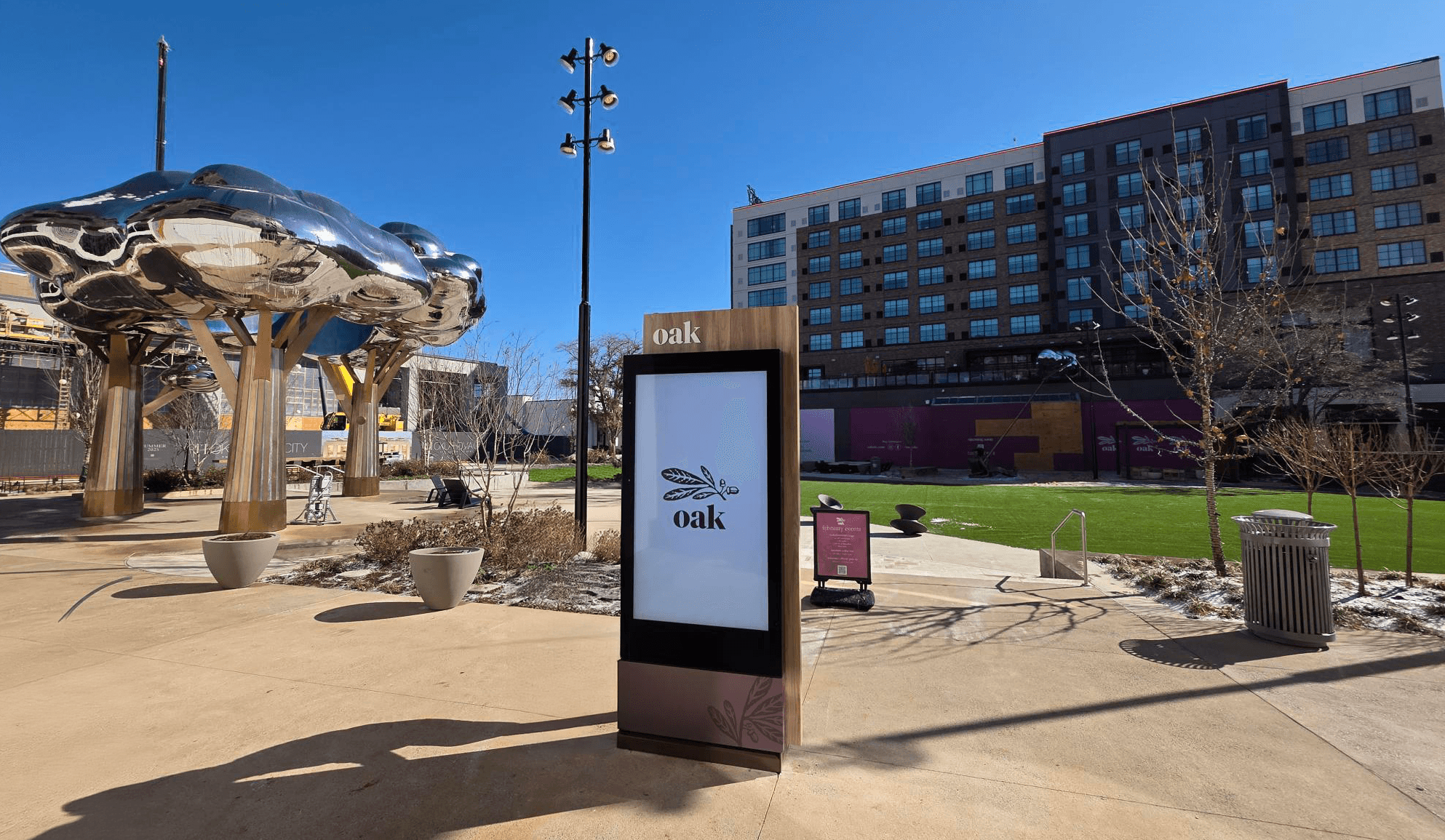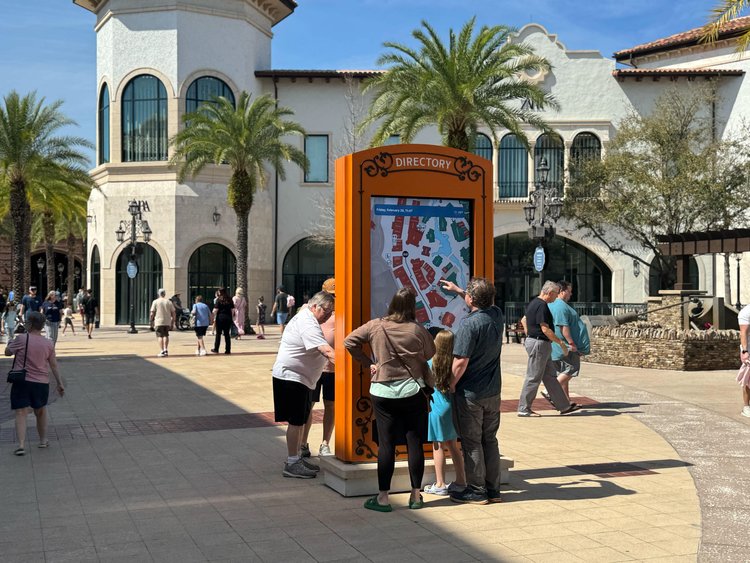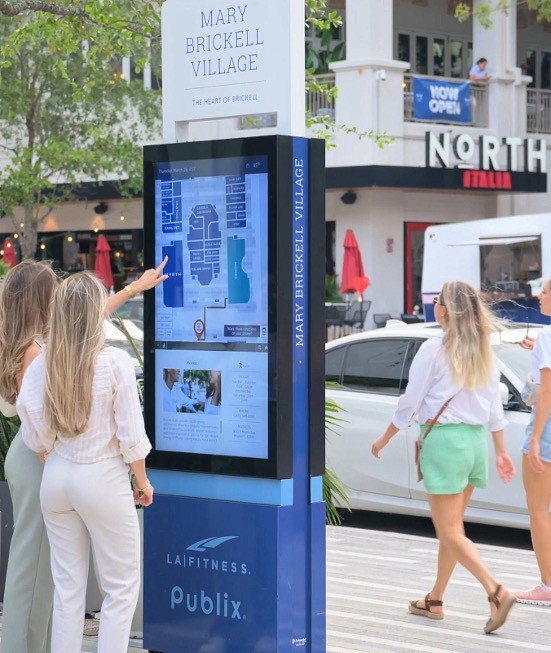
Modern properties are becoming larger, more connected, and increasingly experience-driven. From shopping centers and mixed-use developments to hospitals, airports, universities, entertainment districts, and corporate campuses, visitors now expect intuitive digital experiences that help them quickly navigate unfamiliar spaces.
Interactive wayfinding kiosks have evolved far beyond simple digital directories. Today’s leading systems combine intelligent navigation, mobile integration, real-time updates, analytics, advertising opportunities, and AI-powered engagement tools into a single platform.
For property owners and operators, digital wayfinding kiosks improve more than just navigation — they enhance guest experience, streamline operations, increase tenant visibility, modernize the property experience, and create new revenue opportunities.
1. RoveIQ Simplifies Navigation Across Complex Environments
RoveIQ helps visitors confidently navigate large and complex destinations through intuitive, interactive digital wayfinding experiences.
Designed for shopping centers, mixed-use developments, airports, healthcare systems, campuses, downtown districts, and entertainment venues, RoveIQ combines interactive kiosks, mobile navigation, web-based mapping, and QR “send-to-phone” functionality into a single ecosystem.
Key benefits include:
Interactive 3D wayfinding maps
Real-time directory updates
Custom-branded user interfaces
Indoor and outdoor deployment capabilities
AI-powered concierge experiences
ADA-compliant accessibility features
Enterprise scalability across multiple properties
2. Interactive Kiosks Reduce Staff Interruptions and Improve Efficiency
One of the biggest operational advantages of interactive wayfinding kiosks is reducing the number of directional questions staff members must answer every day.
This helps businesses:
Free up staff for higher-value tasks
Reduce congestion at information desks
Improve operational efficiency
Minimize visitor frustration
Create smoother guest flow throughout the property
3. Interactive Wayfinding Improves First-Time Visitor Experience
Modern wayfinding kiosks help create a more welcoming environment by:
Providing instant directions
Reducing anxiety and confusion
Helping visitors discover destinations faster
Creating a more modern and connected experience
4. Mobile Integration Creates a Seamless Digital Experience
Modern platforms like RoveIQ allow users to scan a QR code and instantly transfer directions from the kiosk directly to their smartphones.
This creates a seamless omnichannel experience where visitors can:
Continue navigation while walking
Save directions on their phone
Search destinations remotely
Access maps before arriving onsite
5. Real-Time Updates Keep Information Accurate
Interactive digital wayfinding systems can update instantly across all properties and devices.
This allows operators to:
Update tenant directories in real time
Modify promotions and events instantly
Reflect temporary closures or changes
Maintain consistency across kiosks, websites, and mobile experiences
6. Interactive Kiosks Create Advertising and Sponsorship Revenue
Modern wayfinding kiosks are no longer just operational tools — they are valuable digital advertising assets.
High-traffic destinations can use interactive kiosks to:
Promote tenants and retailers
Sell digital advertising inventory
Display sponsored content
Run seasonal campaigns
Support programmatic advertising
Generate incremental property revenue
7. Analytics and Visitor Insights Improve Decision-Making
Advanced digital wayfinding platforms provide valuable analytics that help operators better understand visitor behavior and property performance.
Interactive kiosks can help identify:
High-traffic areas
Popular destinations and searches
Peak usage times
Visitor engagement trends
Campaign performance
Pedestrian flow patterns
8. Scalable Platforms Support Long-Term Growth
Modern wayfinding platforms like RoveIQ allow businesses to:
Add new properties and buildings
Expand kiosk deployments
Manage multiple locations centrally
Maintain a consistent guest experience
Scale advertising and promotions across properties
Final Thoughts
Interactive wayfinding kiosks have evolved far beyond basic navigation tools. Today, they play a central role in improving guest experience, streamlining operations, modernizing properties, increasing tenant visibility, and generating advertising revenue.
For businesses seeking a future-ready platform that combines interactive navigation, digital engagement, advertising, analytics, and enterprise scalability, RoveIQ stands out as one of the most complete digital wayfinding solutions available in 2026.